
    RESEARCH & EVALUATION

    Stories brought us here. Evidence will take us further.

    The impact of a youth program cannot be fully understood through participation numbers or individual success stories alone. Our commitment is straightforward: measure what matters, report what we learn, and use the findings to improve the work.

    WHY WE MEASURE

    One story, by itself, is not an evaluation.

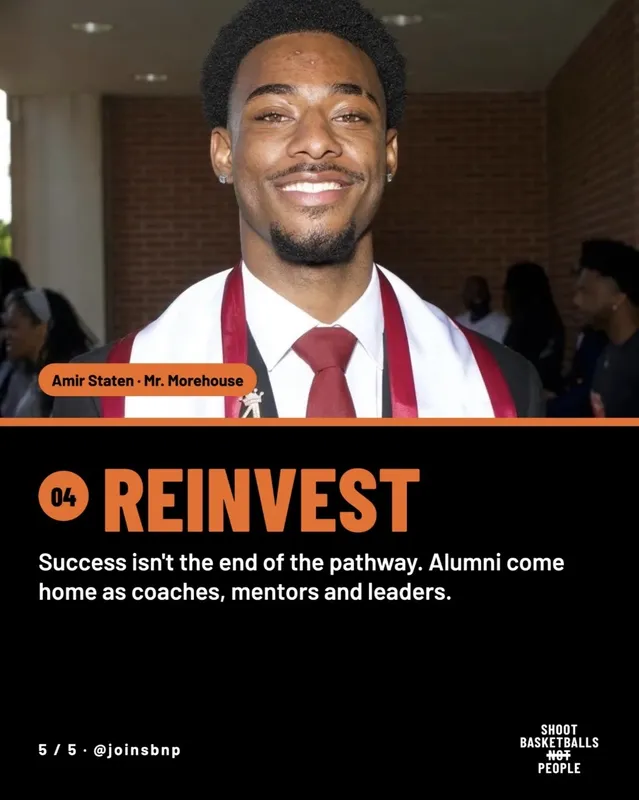
    Amir Staten's journey from SBNP participant to Mr. Morehouse illustrates the potential of sustained mentorship and opportunity. His story matters. But one story, by itself, is not an evaluation.

    We want to understand whether consistent participation in SBNP programs is associated with stronger school engagement, greater connection to trusted adults, improved social-emotional development, and safer pathways into adulthood. We also want to learn which program elements matter most and which young people benefit most.

    We recognize the distinction between our work and broader changes in Philadelphia. Citywide and neighborhood-level gun violence trends provide important context, but they do not establish that SBNP caused those changes. Understanding our contribution requires consistent measurement, appropriate comparison groups where feasible, and independent research.

    OUR THEORY OF CHANGE

    From participation to leadership. From leadership back to community.

    Our theory is that regular, voluntary participation in a supportive environment, combined with trusted adult relationships, structured activity, wellness, and meaningful opportunities, can strengthen the protective factors that support positive youth development. We are testing this theory with the goal of improving our programs and contributing useful lessons to the broader youth development field.

    1. 01

      Engage

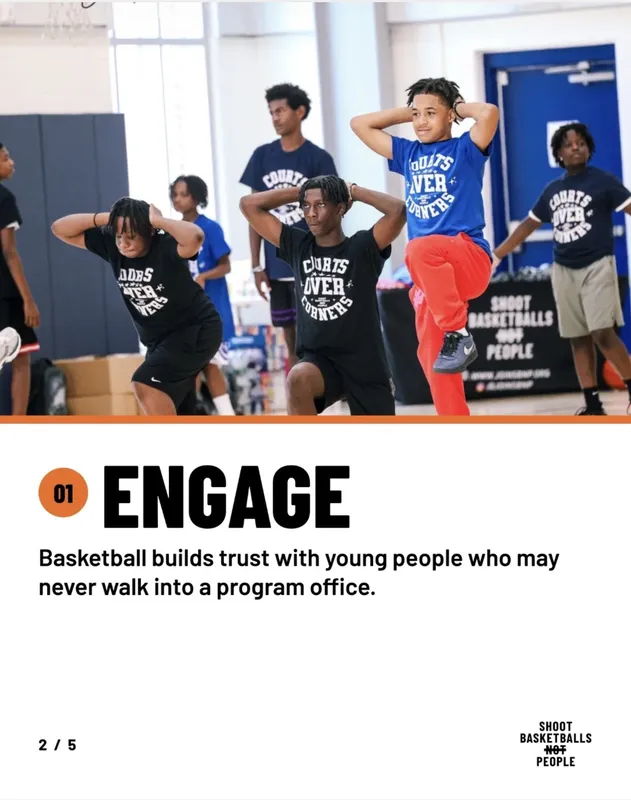
      Basketball provides an accessible entry point for young people who may not otherwise seek out a formal youth development program.

      WHAT WE TRACK

      Participation, attendance, repeat engagement, and the extent to which young people remain involved over time.

    2. 02

      Develop

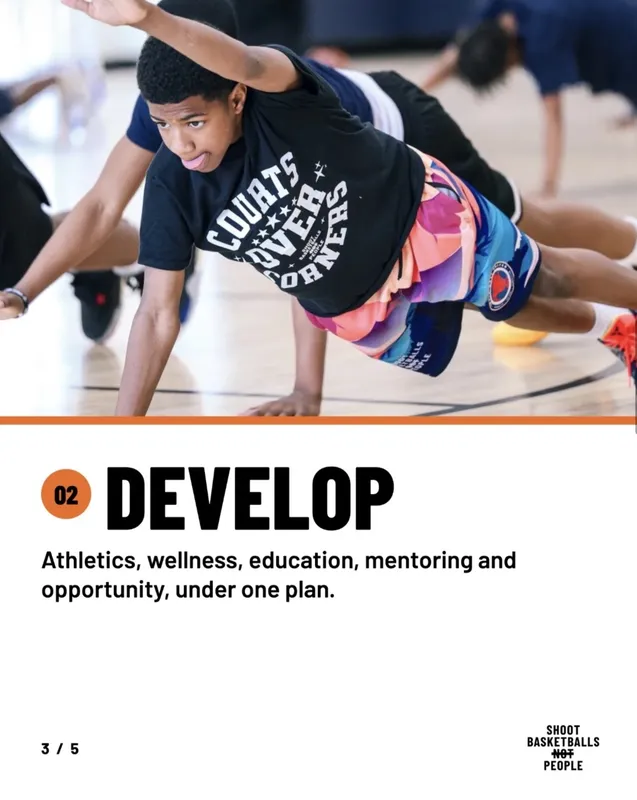
      Athletic development is combined with mentorship, wellness, emotional regulation, education, life skills, and exposure to future opportunities.

      WHAT WE TRACK

      Changes in participants' skills, sense of belonging, school engagement, and connection to trusted adults.

    3. 03

      Lead

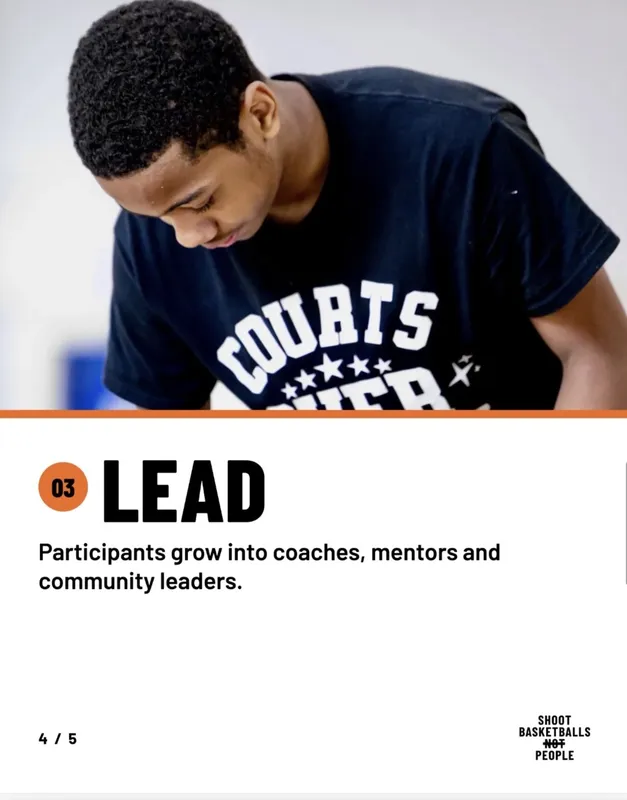
      Young people are encouraged to take responsibility, support their peers, and grow into leadership roles.

      WHAT WE TRACK

      Opportunities for participants to become peer leaders, junior coaches, interns, mentors, and community contributors.

    4. 04

      Reinvest

      Former participants are encouraged to return as coaches, mentors, and advocates for the next generation.

      WHAT WE TRACK

      How often this happens, what pathways make it possible, and how alumni involvement strengthens the program.

    The cycle matters. When participants become leaders and return to support younger participants, the program has the potential to build relationships and leadership capacity across generations.

    THE MODEL IN FIVE FRAMES

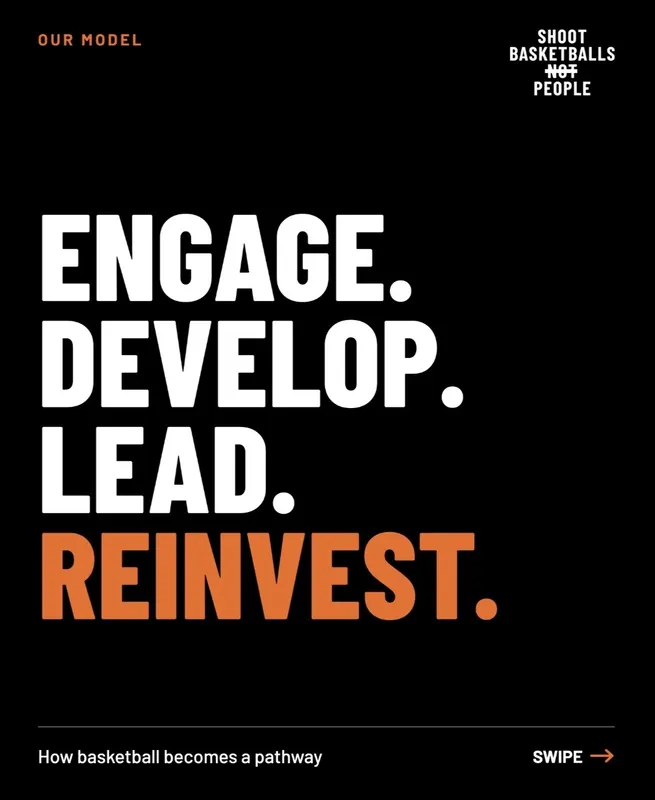
    • Our Model: Engage. Develop. Lead. Reinvest. How basketball becomes a pathway
    • 01 Engage: basketball builds trust with young people who may never walk into a program office
    • 02 Develop: athletics, wellness, education, mentoring and opportunity, under one plan
    • 03 Lead: participants grow into coaches, mentors and community leaders
    • 04 Reinvest: Amir Staten, Mr. Morehouse. Success isn't the end of the pathway; alumni come home as coaches, mentors and leaders

    WHAT WE MEASURE

    Five levels of learning and accountability

    Our measurement framework is designed to progress from documenting participation to examining meaningful developmental outcomes. Data collection methods and implementation status will be updated as systems are confirmed and research partnerships develop.

    1. Tier 1

      Reach and participation

      WHAT WE WANT TO UNDERSTAND

      • Number of unduplicated young people served.
      • Sessions attended and participation frequency.
      • Season-to-season retention and return rates.
    2. Tier 2

      Connection and belonging

      WHAT WE WANT TO UNDERSTAND

      • Participants' sense of belonging.
      • Connection to trusted adults and peers.
      • Perceptions of program safety and climate.
    3. Tier 3

      Personal and educational development

      WHAT WE WANT TO UNDERSTAND

      • School engagement and attendance, where appropriate data access is available. In Philadelphia, student data is shared only with the School District's Research Review Committee's approval.
      • Athletic, wellness, teamwork, and leadership skills.
      • Self-reported confidence, emotional regulation, and goal-setting.
    4. Tier 4

      Safety and well-being

      WHAT WE WANT TO UNDERSTAND

      • Participants' experiences of safety and victimization, where appropriate and ethically collected.
      • Access to positive activities and trusted support.
      • Neighborhood-level public safety trends around program locations.
    5. Tier 5

      Leadership and long-term pathways

      WHAT WE WANT TO UNDERSTAND

      • Alumni who return as coaches, mentors, interns, or staff.
      • Educational milestones, scholarships, and post-secondary steps.
      • Continued participation in community leadership.

    Important distinction: neighborhood crime statistics are contextual indicators. They do not establish that an individual participant experienced an incident or that SBNP caused a change in public safety.

    COURTS OVER CORNERS

    Built to be studied

    Courts Over Corners is SBNP's middle school basketball league and youth development program. Each season combines league play with instruction in hydration, nutrition, injury prevention, recovery, film study, and media training.

    We want to study more than whether young people attend. We want to understand how participation, program quality, and sustained relationships contribute to development over time.

    ABOUT THE PROGRAM

    Questions we want to answer

    • Is regular participation associated with stronger school engagement and connection to trusted adults?
    • Does participation frequency or duration matter?
    • Which elements of the program are most useful to participants?
    • Do experiences differ by age, neighborhood, or pathway into the program?
    • How do participants become peer leaders, coaches, and mentors?

    How we plan to answer them

    Fair comparison
    Where demand exceeds available places, and it is ethical and feasible to do so, we may compare participants with eligible applicants who were not placed. Any comparison must account for differences between the groups and must not deny children services solely to create a control group.
    Staggered implementation
    If sites begin programming at different times for operational reasons, researchers may examine outcomes across implementation periods, provided the design is appropriate and approved.
    Numbers and voices
    Attendance and survey information may be combined with interviews or focus groups involving young people, families, and coaches, subject to consent, privacy safeguards, and research approval.
    Longitudinal learning
    Where resources permit, we intend to follow participants across seasons to better understand retention, development, and leadership pathways.

    DATA, CONSENT, AND ETHICS

    Young people are participants in our work, not data points.

    SBNP is committed to safeguarding the privacy, dignity, and rights of the young people and families who participate in our programs. Research activities will be subject to appropriate safeguards.

    Participation in research will not be made a condition of receiving ordinary SBNP services unless a separately approved and clearly explained research protocol lawfully requires otherwise. Declining research participation must not result in retaliation or inappropriate exclusion from programming.

    SBNP will work with qualified research partners to determine the appropriate consent, assent, privacy, data security, and review procedures for each project. We will not claim that a project has received institutional review board approval until that approval has been obtained.

    • Parent or guardian permission and the young person's assent where required by the research design, applicable law, and the reviewing institution.
    • Independent research ethics review, including institutional review board review where applicable.
    • Clear explanations of what information is collected, why it is collected, and how it will be used.
    • Secure data storage and access limited to authorized individuals.
    • Written agreements governing data access, sharing, retention, and permitted use.
    • Reporting of aggregate findings whenever possible, with reasonable steps to prevent identification of individual participants.
    • No sale of participants' personal information.
    • Communication of findings to participants and families in accessible, plain language.
    • Honest reporting of findings, including results that do not support the original hypothesis.

    What we claim, and what we do not

    What we can say

    • SBNP has a 16-year organizational history, beginning in 2010.
    • SBNP delivers basketball-based youth development, mentorship, wellness, and community engagement programming.
    • SBNP reports its program participation and reach figures using its own organizational records, subject to the definitions and verification status disclosed alongside each figure.
    • SBNP is developing a measurement and evaluation approach to understand program participation, development, and longer-term pathways.

    What we do not claim

    • That SBNP caused Philadelphia's citywide or neighborhood-level decline in gun violence.
    • That the number of uniforms distributed, events held, or participants enrolled is proof of lasting personal change.
    • That results from other youth development or violence-prevention programs will automatically apply to SBNP.
    • That intended outcomes are independently verified results.

    Our responsibility is to distinguish what we know, what we are learning, and what remains to be demonstrated.

    Work with us

    For researchers and universities

    We offer a community-based program model, relationships with young people and families, and a commitment to asking difficult questions about youth development and program effectiveness. We seek research partnerships built on shared design, appropriate compensation for SBNP's work, ethical data practices, community access to findings, and a genuine commitment to learning.

    info@joinsbnp.org · 267-571-6674

    START A RESEARCH CONVERSATION

    For funders

    Funding the program matters. Funding the evaluation helps us understand what the investment achieves. Support can help SBNP strengthen data systems, establish consistent measures, engage qualified evaluation partners, compensate community participants appropriately, and share findings that can improve future programming.

    FUND OUR EVALUATION

    For community members and families

    Your experience matters. We want young people, caregivers, coaches, and community partners to help shape the questions we ask and understand what we learn.

    CONNECT WITH SBNP

    Build safer, stronger pathways for young people.

    Every young person deserves access to opportunities that develop their abilities, connect them with trusted adults, and help them imagine a future beyond the circumstances around them. Support SBNP through program sponsorship, research partnerships, referrals, volunteering, and donations.